
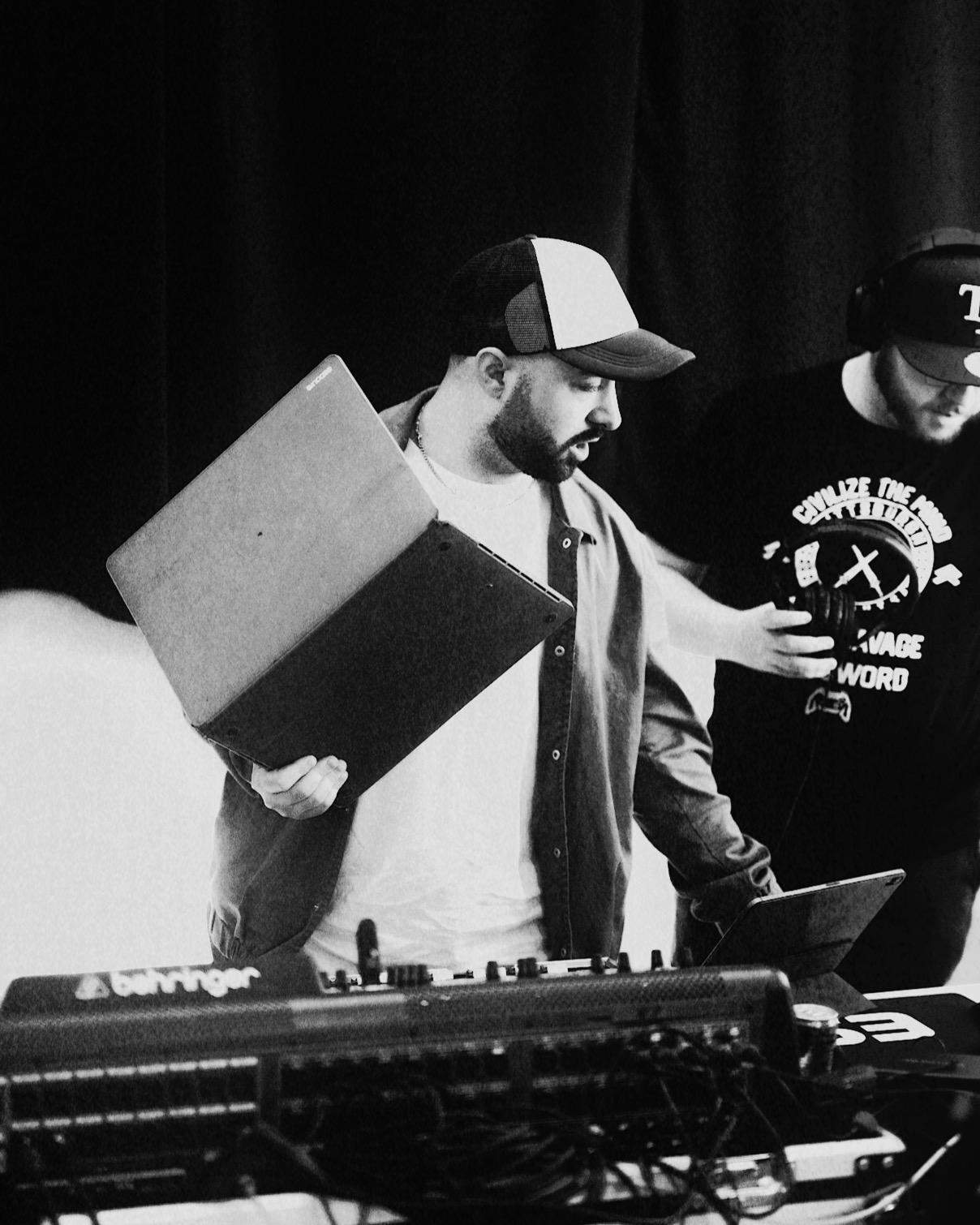
I didn't come to AI music from a software career. I came to it from real sessions, real studios, and real artists trying to finish records under real pressure.
My dad is a musician. My mom is an artist. I grew up in the San Fernando Valley, California on creative energy and not much else. If it weren't for my grandparents, we would've been homeless. They taught me how to work hard. My mom gave me the eye. That's how I ended up as a photographer first, then a creative director, a producer, and eventually the person Kanye West and Ty Dolla $ign brought in to design AI vocals for the Vultures records.
The wider session work
Before AI vocals, I'd already been working as a producer and creative director with Drake, Ty Dolla $ign, Wiz Khalifa, Lil Pump, and others. With production credits on Don Toliver's Hardstone Psycho and Ty Dolla $ign's Featuring Ty Dolla $ign, to name a few.
The pattern I keep seeing: the tools producers actually need are scattered across a dozen websites with credit traps, broken uploads, and unclear data policies. Our work getting trained on without us even realizing it. Leaks being a serious issue. Tools we were unsure if they were accurate or not. Real sessions break on bad tooling more than they break on bad ideas.
Why I'm building Xport Studio
I wanted to build this for a long time. The first idea was called Render Fusion. I hired two developers from Upwork to build it. One scammed me. One held my code hostage and demanded more money. Both were out of the country. I lost months and real money.
If you want something, go get it. Eventually people stop saying no, so why give up?
This is my third and final attempt. I'm building it myself now, learning the engineering as I go with Claude Code, shipping nearly every day. The architecture is local-first because that's the only way the tools can be truly trusted. Your audio never leaves your machine. Your voice models live on your disk. The engine source is auditable.
I'm not building this to look like every other AI audio company. I'm building it because the artists I came up around, the people I've actually worked with in real sessions, deserve tools that protect their work instead of monetizing every keystroke.
What I believe
AI should fuel musicians, not replace them.
I've seen AI used at the highest level as part of a real creative process. I've also seen the cheap version. Empty. Soulless. Taste-free. The result of someone typing a prompt and calling it a song. Those are not the same thing. Xport exists to protect the difference.
That's also why I do this in the open. I want to be a real voice for artists in the music-AI space, not just a founder with an app. I teach what I know online, give away the best tools for free, and build Xport in public, so the people it's for can see how it's made and help shape where it goes.
The free tools build trust. The premium voice layer that will be built becomes the business. The marketplace gives creators ownership over the voices they train. The mission stays the same the whole way through: keep music people in the driver's seat as AI changes what's possible.
What you can expect from me
I prefer to let the work speak for itself and stay behind the scenes. That goes for the music I've worked on and it goes for this product too. The proof is in what ships, not in what I post.
I will tell the truth. When a competitor beats us on something, the comparison pages say so. When something breaks, I fix it publicly. When I don't know the answer to a hard problem yet, I say that too.
I will keep the trust commitment. Your audio never leaves your machine. Your voice models are yours. Your sessions are private by architecture, not by promise. If we ever violate that, you'll have the receipts. The engine is local, the telemetry is opt-in, every claim on this site is verifiable.